Best Sake UK: 5 Picks for 2026
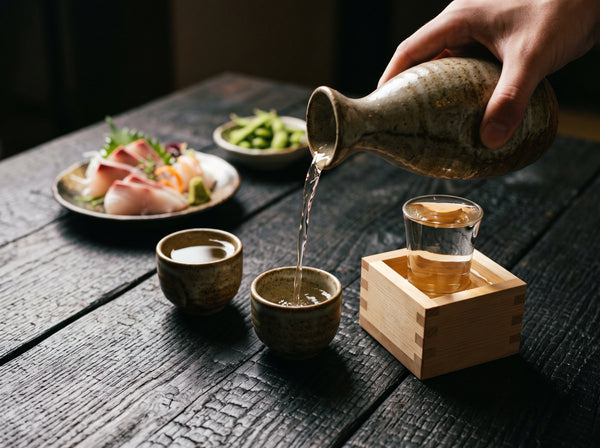
Sake (日本酒, nihonshu) is brewed from rice, rice kōji and water, sometimes with a small amount of distilled alcohol added. Japan's national labelling standard sorts it into eight special grades, set by how far the rice is polished and whether alcohol is added; everything else is futsū-shu, ordinary sake. This guide picks five bottles across those grades, one for each job: drinking with food, a fragrant ginjo, a daiginjo for an occasion, a sake to warm and a small bottle to start with.
Source: SushiSushi Masterclass record "Sake"; NRIB, Glossary of Sake Label Terms, grade table.
| Sake | Best for | Grade, ABV |
|---|---|---|
| Hakutsuru Excellent Junmai, 720ml | Drinking with food, warm or cold | Junmai, 15% |
| Bizen Maboroshi Junmai Ginjo Omachi, 720ml | A fragrant, dry ginjo | Junmai Ginjo, 15.3% |
| Hakutsuru Junmai Daiginjo, 720ml | A special occasion | Junmai Daiginjo, 15.3% |
| Hakutsuru Maru Sake, 500ml | Warming | Futsū-shu, 13.5% |
| Hakutsuru Yamada Nishiki Tokubetsu Junmai, 300ml | A first bottle | Tokubetsu Junmai, 14.5% |
1. Hakutsuru Excellent Junmai, 720ml: best junmai for food
Junmai means pure rice: the sake is made from rice, kōji and water only, with no distilled alcohol added. Hakutsuru, founded in 1743 in the Nada district of Kobe, polishes the rice for Excellent Junmai to 70% and bottles it at 15% ABV.
- Sake meter value +4 and acidity 1.7. A positive sake meter value means a drier sake.
- Our tasting notes: toasted cereal, natural rice sweetness and a dry finish.
- Hakutsuru gives two serving ranges: chilled at 5 to 15°C, or warm at 30 to 50°C.
- With food: sea urchin, miso-marinated fish and stir-fried greens.
- Also comes in an 1800ml bottle.
Worth knowing: this is the most flexible pick here. Try one glass chilled and one warm to see how temperature changes it.

Source: Hakutsuru Sake of Europe, Excellent Junmai product brief (2021); Hakutsuru brand book; SushiSushi sake product sheet (tasting and pairing notes); NRIB grade table.
2. Bizen Maboroshi Junmai Ginjo Omachi, 720ml: best ginjo
Junmai ginjo is pure-rice sake from rice polished to 60% or less of the grain, brewed slow and cold to bring out a fruity aroma. Bizen Maboroshi comes from Sakura Muromachi in Akaiwa, Okayama, which says it was founded in 1688. The brewery uses 100% Omachi rice and the Omachi no Reisen spring, which is listed among Japan's 100 famous waters.
- Polished to 60%, 15.3% ABV, sake meter value +2.5, acidity 1.6.
- Tasting notes: pear, flowers, spearmint and a touch of pepper, rich and dry. The brewery describes a faintly sweet aroma with umami.
- Serve chilled.
- Hakutsuru's pairing guide matches fragrant, ginjo-style sake with lightly scented food such as appetisers.
Worth knowing: Sakura Muromachi is a different brewery from Sakura Masamune of Kobe, despite the similar name.

Source: Muromachi Shuzo website (retrieved 18 June 2026); SushiSushi product listing (read 18 June 2026); Hakutsuru food-pairing framework; NRIB grade table.
3. Hakutsuru Junmai Daiginjo, 720ml: best for a special occasion
Daiginjo is the most polished grade: no more than 50% of each rice grain remains. Junmai daiginjo adds nothing but rice, kōji and water. Hakutsuru polishes this one to 50% using Japanese rice.
- 15.3% ABV, sake meter value +1, acidity 1.3.
- Hakutsuru's tasting notes: ripe apple and pear, a little rice sweetness and a smooth, velvety texture.
- Hakutsuru recommends serving it at 10 to 15°C.
Worth knowing: Hakutsuru also makes a plain Daiginjo, polished to the same 50% but with a little distilled alcohol added. The standard caps that addition at 10% of the weight of the rice. Our Junmai vs Daiginjo guide explains the difference.

Source: Hakutsuru New Product Proposal (January 2025), Junmai Daiginjo and Dai Ginjo; NRIB grade table.
4. Hakutsuru Maru Sake, 500ml: best sake to warm
Maru is Hakutsuru's everyday futsū-shu, the ordinary grade that has no polishing minimum. Its ingredients are water, rice, rice kōji, distilled alcohol, sugars and acidulants, and Hakutsuru makes it with a four-stage mash it credits for its smooth, balanced taste.
- 13.5% ABV, sake meter value +1, acidity 1.2.
- Hakutsuru rates it at every temperature it lists: chilled at 5 to 15°C, room temperature at 20°C, warm at 40°C (nurukan) and hot at 50°C (atsukan).
- Also comes in a 2L pack.
Why warm it? Research summarised by Japan's National Research Institute of Brewing (NRIB) finds sweetness tastes strongest at about 32 to 34°C, while bitterness fades and drops away sharply above about 37°C. A warm serve softens and rounds a sake; a cold one keeps it crisp. More in our sake temperature guide.
Worth knowing: this is not a junmai, as it has added alcohol. If you want a pure-rice sake to warm, Excellent Junmai (pick 1) is rated up to 50°C too.

Source: Hakutsuru Maru product data sheet; Hakutsuru New Product Proposal (January 2025), Maru; NRIB Sake Book (temperature and taste); Masterclass record "Sake warming".
5. Hakutsuru Yamada Nishiki Tokubetsu Junmai, 300ml: best starter bottle
Tokubetsu means special. A tokubetsu junmai qualifies either by polishing to 60% or less or by a declared special method, which is how this 70%-polished sake carries the grade. It is brewed from Yamada Nishiki, a large-grained rice grown in Hyogo since the early 20th century and prized because it stands up to polishing.
- Polished to 70%, 14.5% ABV, sake meter value +3, acidity 1.5.
- Our tasting notes: toasted almonds on the nose, smooth, with a clear aftertaste.
- Serve chilled at 5 to 15°C or warm at 30 to 50°C.
- With food: sukiyaki, tofu dishes, even risotto.
- Also comes in a 720ml bottle.
Worth knowing: 300ml is a small bottle, so it is a low-risk way to try sake both cold and warm before buying a full size.

Source: Hakutsuru sake specifications (December 2022); Hakutsuru brand book (Yamada Nishiki); SushiSushi sake product sheet; NRIB grade table.
How to choose a sake
Grade. Two things set the grade: how much of the rice grain is polished away, and whether distilled alcohol is added. Ginjo needs 60% or less of the grain left; daiginjo 50% or less. "Junmai" on the label means no added alcohol. See our guide to sake grades and types.
Food. Hakutsuru's pairing guide works on balance: rich sake with strongly seasoned food, light and crisp sake with delicate food, and dry sake with salty food. Fragrant ginjo styles suit lightly scented dishes.
Temperature. Most of these picks are made to be served cool, at 5 to 15°C. Excellent Junmai, the Tokubetsu Junmai and Maru also take warming, up to 50°C.
Storage. Keep sake cool and out of light, and drink most styles fresh. NRIB research shows sake kept warm can develop hineka, a stale smell like pickled radish. Long-aged sake is different: it is made to develop caramel-like notes over time.
Serving. A small flask (tokkuri) and cups (ochoko) are the traditional way to serve. Our own Kōmi range includes both, in our Sake Ware collection.
Source: NRIB grade table; Hakutsuru food-pairing framework; Hakutsuru serving data; NRIB newsletters (storage and off-aromas); Masterclass record "Sake warming".
Sake FAQ
What is the difference between junmai and daiginjo?
They answer different questions. Junmai means no distilled alcohol is added. Daiginjo means the rice is polished until 50% or less of the grain remains. A junmai daiginjo is both.
Should sake be served warm or cold?
It depends on the sake. Hakutsuru serves its ginjo and daiginjo at 10 to 15°C, and rates its junmai and Maru for warming at 40 to 50°C as well as chilled. Warmth tends to bring out sweetness and soften bitterness.
What does the sake meter value mean?
It measures a sake's density against water. A positive number points to a drier sake and a negative one to a sweeter sake. The five picks here run from +1 to +4.
How should I store sake?
Keep it cool and out of direct light, and drink most styles fresh. Warm storage can give sake a stale off-smell.
What sake makes a good gift?
See our guide on what sake to buy as a gift.
Shop the full sake range
New to sake? Start with What Is Sake?, then browse every bottle we stock in our Japanese Sake collection.
Sources for this page: SushiSushi Masterclass records "Sake", "Hakutsuru", "Sakura Muromachi", "Sake warming" and "Sake pairing", drawing on the NRIB Glossary of Sake Label Terms (5th edition, 2023), NRIB Sake Book and NRIB newsletters (© National Research Institute of Brewing), Hakutsuru's brand book, product brief (2021), specifications (2022), Maru data sheet, New Product Proposal (2025) and food-pairing framework (© Hakutsuru Sake Brewing Co.), the Muromachi Shuzo website (retrieved 18 June 2026), and SushiSushi's own product sheet and listings. Facts are reworded; no text is reproduced.
Alcohol is for adults aged 18 and over. Please drink responsibly.

