
Best Miso UK: 5 Picks for 2026
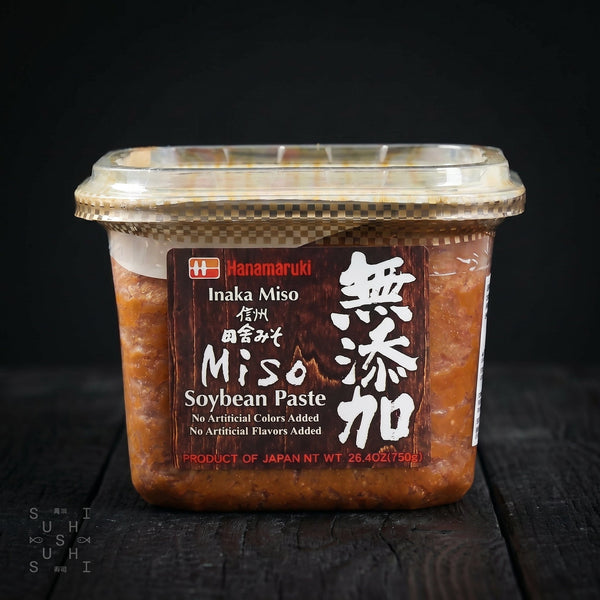
Miso is a fermented soybean paste made with kōji, a rice-, barley- or soybean-malt culture that drives the fermentation, plus salt. Rice-malt miso (kome-miso) dominates the Japanese market at around 82% of everything made, which is why it's the style most people picture when they think of miso, but that single label covers a wide range: mild, sweet white pastes at one end and bold, salty aged pastes at the other, with the right choice depending entirely on what you're cooking. We import and stock miso direct from established Japanese producers, some brewing in the same region for generations, and these five cover the range worth having in a kitchen.
| Product | Best For | Price | Link |
|---|---|---|---|
| Hanamaruki, Rustic White Miso Paste 750g | Everyday miso soup | £6.99 | Shop now |
| Marukome, Red Miso Paste (Aka Miso) 1kg | Bold, hearty dishes | £9.99 | Shop now |
| Maruya, Original Hatcho Miso 300g | Deep, concentrated umami | £11.99 | Shop now |
| Classic Saikyo Miso 500g | Delicate, sweet dishes | £12.99 | Shop now |
| Tsurumiso, Sesame Miso 160g | A nutty, flavoured twist | £6.99 | Shop now |
1. Hanamaruki, Rustic White Miso Paste 750g: Best for Everyday Miso Soup
An additive-free (mutenka) miso from Hanamaruki, a Nagano producer. Nagano prefecture (historically the Shinshū region) is Japan's best-known miso-brewing region; it's where the long, traditional fermentation method is still practised today, ageing soybeans, rice-malt kōji and salt in wooden barrels for up to three years. This paste is milder and rounder than that extreme, built to be the supporting act in a bowl of soup rather than the main event.
- Provenance: brewed in Nagano prefecture, the same region behind Japan's most traditional long-fermentation miso houses.
- Taste and texture: gentle, additive-free fermentation gives a soft, rounded umami without the sharpness some pastes carry.
- Practical note: available as a single 750g tub or a case of 6 for kitchens going through it fast.
£6.99: Shop Hanamaruki Rustic White Miso
Not for: dishes that need a bold, assertive miso hit, this one is built to blend in, not stand out.
2. Marukome, Red Miso Paste (Aka Miso) 1kg: Best for Bold, Hearty Dishes
Marukome's aka (red) miso is fermented for longer than a white paste, which is what darkens the colour and builds the stronger, saltier register. As a rule of thumb, red miso runs roughly double the salinity of a pale white miso, so it holds its own in robust cooking in a way a delicate paste can't.
- Provenance: Marukome, one of Japan's most established miso houses, brewing in the Shinshū region.
- Taste and texture: firmer and more assertive than white miso, with a long umami finish and notes of caramel and toasted grain from the extended fermentation.
- Practical note: a little goes further than white miso, start with less than you'd use of a paler paste, since the salt level is higher. Also available in a 20kg catering format for volume kitchens.
£9.99: Shop Marukome Red Miso
Not for: delicate dishes or light dressings where a subtler white miso won't get overpowered.
3. Maruya, Original Hatcho Miso 300g: Best for Deep, Concentrated Umami
Maruya makes Hatcho miso in Okazaki City using a soybean-malt method (mame-miso), aged over two years in cedarwood barrels weighted with river stones rather than the rice-malt process behind most everyday miso. Soybean-malt miso is a small share of the overall Japanese market, which is part of why it tastes so distinct from the rice-malt pastes most people know.
- Provenance: Aichi prefecture, made using a long-established soybean-malt (mame-miso) method rarely seen outside the region.
- Taste and texture: dense and hearty with a slightly sweet undertone beneath the dominant savouriness; notably, it holds its flavour even when simmered, unlike most miso.
- Practical note: traditionally used at roughly two heaped tablespoons per pot of soup, dissolved gradually through a sieve rather than stirred in directly.
£11.99: Shop Maruya Original Hatcho Miso
Not for: anyone wanting a mild, easy introduction to miso, this is the most intense of the five.
4. Classic Saikyo Miso 500g: Best for Delicate, Sweet Dishes
A traditional Kyōto-style white miso, made with a higher proportion of rice kōji relative to soybean than a standard white paste, for a pale, mellow result with gentle sweetness rather than the fuller savouriness of an everyday miso soup paste. This is the style classically used for saikyo-zuke, marinating fish overnight in sweet miso before grilling.
- Provenance: Kyoto prefecture, following a regional style built on increased rice kōji and a comparatively short fermentation for a mild result.
- Taste and texture: smooth and subtly sweet rather than salty, designed to elevate rather than dominate fish, vegetables and glazes.
- Practical note: works well blended with butter or cream for a savoury-sweet sauce base, not just as a soup miso.
£12.99: Shop Classic Saikyo Miso
Not for: hearty braises or dishes that need a strong, salty backbone, reach for the red or Hatcho instead.
5. Tsurumiso, Sesame Miso 160g: Best for a Nutty, Flavoured Twist
A blended miso: Tsurumiso's base paste stirred through with roasted sesame for a nuttier, richer seasoning that works as well in marinades and glazes as it does in soup. Blended misos like this sit alongside styles such as yuzu miso and Japanese-pepper miso as a distinct, flavoured format rather than a straight ferment.
- Provenance: Fukuoka prefecture, from an established Japanese miso house.
- Taste and texture: the roasted sesame adds a nutty depth and gentle sweetness on top of the base miso umami.
- Practical note: good mixed with soy sauce and mirin as a quick glaze, or stirred into noodle broths and stir-fries for a sesame-forward finish.
£6.99: Shop Tsurumiso Sesame Miso
Not for: traditional, unadorned miso soup where you want the plain fermented flavour rather than a sesame accent.
How to Choose a Miso
Rice-malt, barley-malt or soybean-malt
Japanese miso is classified by the malt (kōji) it's built on. Rice-malt miso (kome-miso) is by far the most common, at roughly 82% of everything made in Japan, and it's the base for both the white and red pastes on this list. Barley-malt (mugi-miso) and soybean-malt (mame-miso) each make up a much smaller share; Maruya's Hatcho miso above is a soybean-malt paste, which is a large part of why it tastes so different from the other four.
White (shiro) vs red (aka) vs Hatcho
Within rice-malt miso, colour and salinity track fermentation length. White miso is fermented for the shortest time, giving a pale colour and a mild, faintly sweet flavour suited to delicate dishes; red miso is aged longer, turning darker and noticeably saltier, roughly double the salt level of a white paste, with a stronger, more savoury profile that holds up in heartier cooking. Hatcho miso, aged over two years, sits at the extreme end: a dense, concentrated soybean-malt paste that keeps its flavour even under prolonged simmering, unlike paler misos.
Matching miso to the dish
As a rule, delicate ingredients (white fish, light vegetables, dressings) pair with white or Saikyo miso, while robust dishes (braises, hearty soups, grilled glazes) call for red or Hatcho. Many kitchens keep both a white and a red on hand and blend them to dial in the exact strength a dish needs, rather than relying on one miso for everything.
Beyond miso soup
Miso isn't only a soup base. Whisked into a marinade it seasons meat and fish before grilling (as in saikyo-zuke); blended into butter, cream or dressings it adds a savoury backbone to dishes with no Japanese ingredients at all; and stirred into braising liquids or ramen tare it builds depth in seconds. Add it towards the end of cooking rather than at the start: a hard boil dulls the aroma and can damage the live cultures the fermentation produced.
Storing miso
Miso is a preserved product and keeps for months once opened, provided it's kept refrigerated with the surface pressed smooth or covered with cling film or greaseproof paper to limit contact with air. Some surface darkening over time is normal oxidation, not spoilage; stir it back through before use.
FAQ
What is the difference between red miso and white miso?
The main difference is fermentation time. Red miso (aka miso) is matured longer, which darkens the colour and roughly doubles the salinity compared with a white paste, building a stronger, saltier, more savoury flavour. White miso (shiro miso) is fermented for a shorter period and tastes milder and slightly sweet. White suits delicate dressings, light soups and fish; red carries heavier dishes such as braises, hearty soups and grilled glazes.
How much miso should I use in miso soup?
As a guide, around 15 to 18 grams of miso, roughly one tablespoon, seasons a 200ml bowl of dashi, though saltier pastes like red or Hatcho miso are best started at the lower end and adjusted to taste. Whisk the paste into hot but not boiling dashi, ideally through a small sieve, and take the pan off direct heat once the miso is in, since a hard boil dulls the aroma.
What makes Hatcho miso different from other miso?
Hatcho miso is a soybean-malt (mame-miso) paste rather than the more common rice-malt style, aged for over two years in cedarwood barrels weighted with river stones, far longer than standard white or red miso. This extended fermentation produces a dense, dark, concentrated paste with a distinctive trait: unlike most miso, it doesn't lose its flavour when simmered for longer periods, which is why it suits long-cooked soups and stews.
Can I use miso in non-Japanese cooking?
Yes, miso works as a savoury backbone well outside Japanese dishes. Fold it into butters, dressings, caramels or gravies, blend it with cream for a pasta or vegetable sauce, or use a sweeter miso like Saikyo to marinate fish or chicken overnight before grilling.
How should I store miso paste after opening?
Keep it refrigerated once opened and press the surface smooth, or lay a sheet of greaseproof paper or cling film directly onto it, to limit contact with air. Miso is a preserved product and keeps for months when stored well; surface darkening where it meets the air is normal oxidation, not spoilage.
Explore the full range in our Miso collection.

