Kokuto and Kuromitsu: Japanese Black Sugar and Syrup
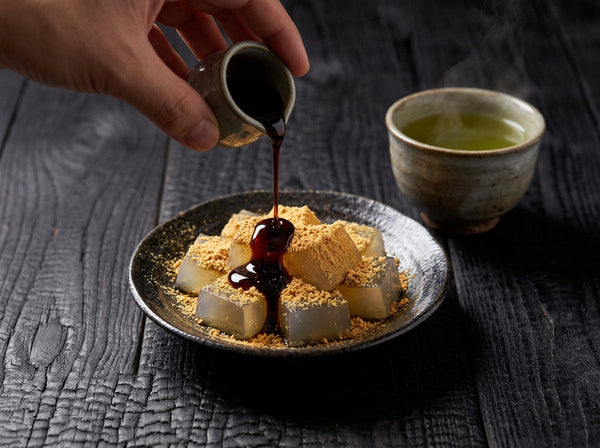
Kokutō (黒糖), black sugar, is sugar cane juice boiled down and set, rather than refined into white crystals. It is the sugar of Japan's southern islands, Okinawa and Amami, and the base of kuromitsu, the dark black sugar syrup poured over warabi mochi and kuzu sweets.
This guide explains how kokutō is made, where it comes from, how it differs from brown sugar, and how to make kuromitsu at home. It sits inside our Pantry Masterclass.

Our kokutō: Kakinohana Tarama Island Kokuto Powder, 200g and Kokuto Cubes, 200g, from sugar cane grown on Tarama Island, Okinawa.
How Is Kokutō Made?

Japan's Ministry of Agriculture (MAFF) describes the method on its Kagoshima traditional foods page. The cane is pressed and the juice filtered. Calcium hydroxide, or quicklime, is added to the clear juice to lift the scum, and the juice is boiled down slowly in open-fire pans, then cooled until it sets. Because it keeps so much molasses, kokutō sets into blocks, sold broken or powdered. It is made in winter, when the cane is harvested, and has a deep, caramel-like body and sweetness.
Source: MAFF Nippon Dentōshoku Zukan page for Kagoshima kokutō. Facts extracted and reworded.
Where Does Kokutō Come From?
MAFF gives two accounts, from two places:
- Amami, Kagoshima. The method is said to have come from China in the early 1600s, starting on Amami Ōshima. Under the Satsuma domain, kokutō, then a costly medicine, was taken as tax in place of rice and made a domain monopoly, a harsh burden on the islanders.
- Okinawa. Okinawa's account dates production to 1623, with a method brought back from Ming China by an envoy of the Ryūkyū kingdom; it became a key industry for the kingdom's finances. "Okinawa Kokutō" was registered as a Geographical Indication in November 2025, described as having a distinctive deep taste with a slight bitterness, and as essential to Okinawan dishes such as rafute pork, chinbin pancakes and sātā andagī doughnuts, and eaten as a snack with tea.
Source: MAFF Nippon Dentōshoku Zukan page for Kagoshima kokutō; GI register entry No. 172 (Okinawa Kokutō). Facts extracted and reworded.
Is Kokutō the Same as Brown Sugar?
No. Most brown sugar is refined white sugar with some molasses added back. Kokutō is cane juice boiled down without the refining step, so its colour and flavour come from the cane itself. It tastes darker, with a rich, molasses-like edge, and a spoonful changes a sauce more than the same amount of white sugar.
How to Make Kuromitsu

MAFF names kokutō as the raw material for kuromitsu. To make it at home:
- Put roughly equal weights of kokutō and water in a small pan.
- Dissolve over a low heat, stirring.
- Simmer gently until it thickens slightly, skimming any scum.
- Let it cool before using.
Pour it over warabi mochi, kuzu, jelly or ice cream. In Kagoshima, MAFF's recipe for akumaki, the lye-soaked rice cake made for the Boys' Festival, serves the sliced cake with kinako and kuromitsu.
Source: MAFF Nippon Dentōshoku Zukan page for Kagoshima kokutō; Uchi no Kyōdo Ryōri page for Kagoshima akumaki. Facts extracted and reworded.
Other Ways to Use Kokutō
- Simmering. In place of white sugar in kakuni pork belly, nimono or teriyaki, for a darker, rounder sweetness.
- Baking. In place of dark muscovado in cakes, cookies and sātā andagī.
- Drinks. To sweeten green tea, coffee or milk.
- Kokutō nuts. MAFF's recipe: boil 50g of kokutō with 1 tablespoon of water, stir in 100g of roasted mixed nuts until the sugar crystallises, and cool on baking paper.
Popular Products
Three to start with: Tarama Island kokutō as powder or cubes, and Okinawan kokutō in a larger pack.
Kakinohana Tarama Island Kokuto Powder, 200g
Fine powder that dissolves quickly, for kuromitsu and simmering.


Kokuto Okinawan Powdered Brown Sugar, 270g
Okinawan kokutō in a larger pack. See also Yoshimura Kokuto Umeshu, 720ml.
Frequently Asked Questions
What is kokutō?
Japanese black sugar: sugar cane juice boiled down and set, without refining.
What is kuromitsu?
Black sugar syrup, made by dissolving kokutō in water and simmering it.
What is kuromitsu used for?
Warabi mochi, kuzu sweets, jelly, ice cream and rice cakes.
Can I use brown sugar instead of kokutō?
Dark muscovado is the nearest swap, but the flavour is not the same.
Where is kokutō made?
On Japan's southern islands, in Okinawa and Amami in Kagoshima.
Where to Buy Kokutō in the UK
We stock Kakinohana Tarama Island Kokuto as powder and cubes, from sugar cane grown on Tarama Island, Okinawa, and Okinawan kokutō in a larger pack.
For more, browse the Pantry Masterclass. Read next: Uji matcha and the matcha latte · Mochi and ozōni
Sources: Ministry of Agriculture, Forestry and Fisheries of Japan: Nippon Dentōshoku Zukan page for Kagoshima kokutō; GI register entry No. 172 (Okinawa Kokutō); Uchi no Kyōdo Ryōri page for Kagoshima akumaki; retrieved 5 November 2026; Kakinohana product specifications. Facts extracted and reworded, not reproduced.
