Unagi Kabayaki: Japanese Grilled Eel Explained
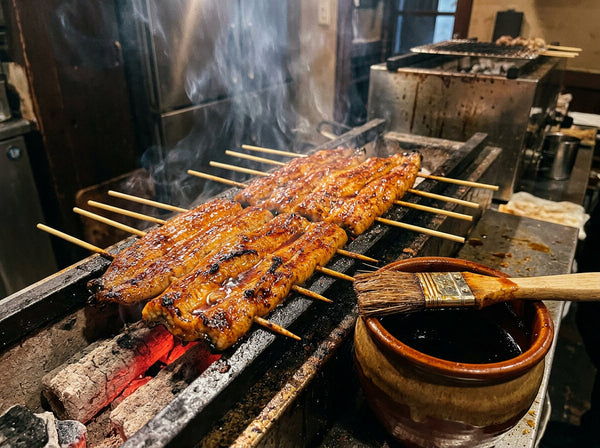
Unagi kabayaki (鰻の蒲焼き) is freshwater eel, split, grilled and lacquered with a sweet soy tare, a dish that became a craze in Edo, old Tokyo.
This guide covers how Edo-style kabayaki is made, why Tokyo and Osaka do it differently, where the name and the summer eel-eating day come from, how to make the tare, and why Japan now manages its eel stocks closely. It sits inside our Pantry Masterclass.

For the glaze: Shibanuma Gluten Free Unagi Sauce, 1.8L, from a family brewing soy in Ibaraki since 1688. For the pepper: Shinohata Dried Budo Sansho, 8g. We do not sell eel itself.
How Edo-Style Kabayaki Is Made

Japan's Ministry of Agriculture (MAFF) records that the word Edo-mae, now used for Tokyo-style sushi, began as the name for eel caught near the mouth of the Ōkawa, today's Sumida River. Edo-style kabayaki follows set steps: the live eel is split and skewered, grilled plain (shirayaki), steamed, then grilled again with tare.
The regions split here. In Kantō, around Tokyo, the eel is opened from the back and steamed before the final grilling. In Kansai, around Osaka and Kyoto, it is opened from the belly and not steamed. In Kansai, eel dishes are also called mamushi, said to come from ma-mushi, rice steamed with eel between the layers.
Source: MAFF Uchi no Kyōdo Ryōri page for Tokyo eel kabayaki; aff magazine July 2016 eel feature. Facts extracted and reworded.
Where the Name Comes From
There are several theories. The eel, skewered whole, looked like the seed head of a cattail (gama); its colour was like birch bark (kaba); or its aroma reached people fast (kabaya). The seasoning changed over time, from salt, to soy sauce, to a tare of soy sauce, sugar and mirin, which turned kabayaki into a craze. At first eel and rice were served separately; una-don, eel on rice, spread as a way to keep it hot for delivery.
Source: MAFF Uchi no Kyōdo Ryōri page for Tokyo eel kabayaki; aff magazine July 2016 eel feature. Facts extracted and reworded.
Doyō no Ushi no Hi: The Eel Day
Eating eel on doyō no ushi no hi, the day of the ox in the doyō period, was an Edo custom. Doyō is the roughly 18 days before the start of each season, and the ox day comes round every 12 days, so in some years there are several. The summer one, in late July, is the famous eel day. MAFF notes that the most famous theory credits the idea to the Edo scholar Hiraga Gennai. The eel's true season, though, is autumn.
Source: MAFF Uchi no Kyōdo Ryōri page for Tokyo eel kabayaki; aff magazine July 2016 eel feature. Facts extracted and reworded.
How to Make Kabayaki Tare
MAFF's Tokyo recipe, for four pre-grilled eels:
- Heat 5 cups of cooking sake to burn off the alcohol.
- Add 1½ cups of soy sauce and 150g of sugar.
- Reduce over a medium heat for about 10 minutes.
- Grill the eel in a pan, brushing it with the tare.
Or use a ready unagi sauce, which also glazes salmon, other oily fish, tofu and aubergine. Finish with a pinch of freshly ground sanshō, the traditional pepper for eel.
Source: MAFF Uchi no Kyōdo Ryōri page for Tokyo eel kabayaki. Facts extracted and reworded.
Japan's Eel Stocks

Most eel eaten in Japan is farmed, but farms start from wild glass eels. MAFF's fisheries white paper explains that the Japanese eel hatches near the Mariana Trench and rides the Kuroshio current to Taiwan, China, Japan and Korea, where the young eels are caught. Because the four share one stock, they set limits together. In Japan, eel farming has needed a ministerial licence since June 2015, catching eels of 13cm or under has needed a prefectural licence since December 2023, and traceability rules apply to them from December 2025.
Source: Fisheries Agency white paper on eel stock management. Facts extracted and reworded.
Popular Products
Three to start with: the unagi sauce for the glaze, and sanshō two ways to finish.


Frequently Asked Questions
What is unagi kabayaki?
Freshwater eel, split, grilled and glazed with a sweet soy tare.
What is the difference between Tokyo and Osaka eel?
Tokyo opens the eel from the back and steams it before the final grilling; Osaka opens it from the belly and does not steam.
What is unagi sauce made of?
Soy sauce, sugar and sake or mirin, reduced to a glossy glaze.
When do Japanese people eat eel?
Famously on doyō no ushi no hi in late July, though the eel's true season is autumn.
What goes with kabayaki?
Rice and a pinch of ground sanshō pepper.
Where to Buy Unagi Sauce in the UK
For the glaze we stock Shibanuma Gluten Free Unagi Sauce, 1.8L, from a family brewing soy in Ibaraki since 1688, with Shinohata sanshō and Tsuno sanshō oil to finish. We do not sell eel itself.
For more, browse the Pantry Masterclass. Read next: Kabayaki vs teriyaki · Teriyaki golden ratio · Unagi sauce recipes
Sources: Ministry of Agriculture, Forestry and Fisheries of Japan: Uchi no Kyōdo Ryōri page for Tokyo eel kabayaki; aff magazine July 2016 eel feature; Fisheries Agency white paper on eel stock management; retrieved 5 November 2026; Shibanuma, Shinohata and Tsuno product specifications. Facts extracted and reworded, not reproduced.

