
Umeshu: Japan's Plum Liqueur, and the Mirin One We Can't Stop Thinking About
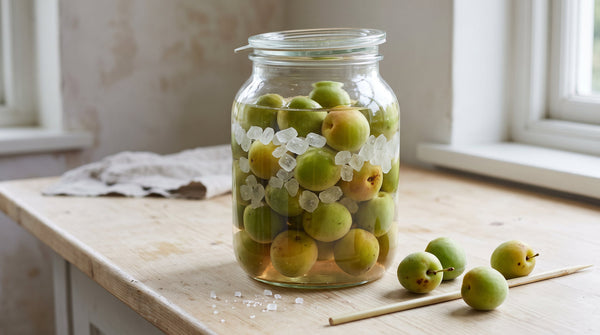
Umeshu is ume fruit, sugar and alcohol, left in a jar until the fruit gives up everything it has. No yeast, no fermentation. It is a liqueur, not a wine, whatever the menu calls it.
In March I tasted two at FOODEX in Tokyo, made for Minabe Craft Umeshu. One was built on gin. The other was built on mirin, the sweet rice seasoning that sits in every Japanese kitchen. That second one is the reason for this post. It sits inside our Drinks Masterclass.

Our umeshu: Hakutsuru Umeshu Genshu 720ml and Hamada Classic Luxury Umeshu 720ml.
Why It Matters If You Cook or Buy
When umeshu turns up on a UK drinks list it is often called plum wine, and it is often the only one on the list. That hides a whole category. The fruit, the sugar, the base spirit and the time in the jar all change the glass. If you buy for a bar or a kitchen, those four things are what you are paying for.
What Umeshu Actually Is
Ume looks like a plum but sits nearer the apricot. Unripe, it is fiercely sour, and in Japan it is pickled, salted or steeped rather than eaten from the hand. Japan's tax law classes umeshu as a liqueur: alcohol plus sugar and other ingredients, steeped rather than brewed.
Shop-bought umeshu usually sits around 14% alcohol. Undiluted versions, called genshu, run higher. Our Hakutsuru Umeshu Genshu is 19.7%.
Nanko Ume and the Minabe-Tanabe Ume System
The best-known fruit is Nanko ume, a large, thin-skinned variety with soft flesh that gives up its flavour quickly. Most of it grows in Wakayama, on the Kii peninsula south of Osaka. In 2025 Wakayama grew 58% of Japan's whole ume crop, by the government's own figures.

Around the towns of Minabe and Tanabe the growers keep forest on the ridges and plant ume on the slopes below. The forest holds the water and the soil. In December 2015 the UN's Food and Agriculture Organization named this the Minabe-Tanabe Ume System, a Globally Important Agricultural Heritage System, for 400 years of growing ume this way.
How It Is Made
At home in Japan it starts when the ume harvest comes in, early June to early July. Fresh, unbruised fruit, washed and dried completely, because a damp ume clouds the jar. Fruit and rock sugar go in layers in a clean glass jar. Strong spirit goes over the top. Then the jar goes somewhere cool and dark, and you wait months.
Rock sugar dissolves slowly, so the spirit reaches the fruit first. The sugar does two jobs: it pulls the juice out and it softens the acid. Cut it too far and the drink goes flat.
About half the acid in umeshu is citric acid. The almond note comes from benzaldehyde, and most of that sits in the stone. That is why the whole fruit goes in, stone and all.
Green or Ripe Fruit
Green or ripe fruit is the craft question. Commercially, green ume is the norm, for logistics: firm fruit keeps and ships better. Choosing ripe fruit is a deliberate call by the maker. Both Hakutsuru and Hamada, two of the makers we buy from, say they use fully ripened fruit.
There is a mark to look for on the label: 本格梅酒, honkaku umeshu. Since 23 January 2015 it has meant ume, sugar and alcohol only. No added acid, colour or flavouring.
Mirin Umeshu
The usual base is a clean, neutral spirit. Older recipes used sake. Newer makers use shochu, brandy, whisky and now gin and mirin.
Fuu, the mirin umeshu I tasted, is 8% alcohol. The label lists two things: mirin made in Japan and Nanko ume from Minabe. No added sugar on the list, because the mirin brings its own. It is made by Yokoyama Foods in Wakayama for Minabe Craft Umeshu.
That is low for umeshu; shop-bought bottles usually sit nearer 14%.
Its sister, Yii, goes the other way: 26% on a Wakayama gin base with beet sugar. Same fruit, two completely different drinks. That is the whole point of the category.
How to Serve It

Neat, in a small glass, before dinner.
On the rocks.
Long, with soda and ice.
With hot water in winter. Hakutsuru rate their Umeshu Genshu just as highly with hot water as on the rocks. Add the water a little at a time and taste as you go.

Hakutsuru suggest their Umeshu Genshu with pesto pasta, sandwiches and even samosa.
The Lesson
Read the back of the bottle. Fruit, sugar, base spirit, strength. Those four lines tell you more than the word "umeshu" ever will.
Popular Products
Two makers who say they use fully ripened fruit.


Where to Buy Umeshu in the UK
We stock Hakutsuru Umeshu Genshu 720ml, the 300ml bottle and Hamada Classic Luxury Umeshu 720ml. The Minabe mirin umeshu is not in stock yet.
For more, browse the Drinks Masterclass, or read Umeshu vs Sake: What's the Difference? and Japanese Alcohol: Sake, Shochu, Umeshu and Mirin Explained.
