
Japanese Sesame: White, Black and Gold Goma Explained
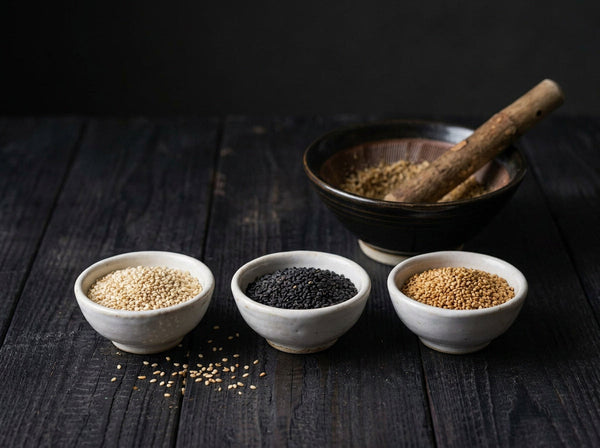
Sesame, goma (胡麻), is one of the quiet workhorses of Japanese cooking: scattered over rice and sushi, ground into dressings and sauces, pressed into oil and even set into a silky "tofu". Japan uses three colours of sesame, white, black and gold, and each has its own character.
This guide explains the difference, the classic sesame dishes, and how to use each form at home. It sits inside our Pantry Masterclass.

Our sesame comes from Kuki, a sesame house in Yokkaichi, Mie, working with sesame since 1886 (meet Kuki): Kuki Deep Roast Black Sesame Seeds, 65g, Kuki Roasted Gold Sesame Seeds, 1kg and Kuki Classic Roast Sesame Oil, 170g.
White, Black or Gold Sesame?

Japan's Ministry of Agriculture (MAFF) explains that sesame is grouped by the colour of its seed coat into white, black and gold, and that around 3,000 kinds are grown worldwide. Almost all the sesame sold in Japan is imported, from countries such as Thailand, China, Turkey and parts of Africa.
- White sesame (shiro goma). Widely grown. It holds slightly more oil, so it is the usual seed for sesame oil, and it is the type most preferred in western Japan.
- Black sesame (kuro goma). Grown mainly in China and South East Asia. Its skin is hard, so it is usually ground before eating. It tastes earthier and stronger.
- Gold sesame (kin goma). Also called yellow or brown sesame. Richer and more aromatic than the others, and the most expensive; MAFF notes it is used in kaiseki cooking. Turkish gold sesame is well known.
Source: MAFF Shōhisha no Heya consumer answer on sesame types. Facts extracted and reworded.
Seeds, Paste or Oil?
- Iri goma, roasted seeds. Ready to scatter. Warm them for a few seconds in a dry pan, or grind them just before use, to bring the aroma back.
- Suri goma, ground sesame. Crushed in a suribachi, a ridged Japanese mortar, or a sesame grinder. Grinding releases the oils and the smell.
- Neri goma, sesame paste. Roasted sesame ground until its own oil turns it smooth. It is the base of goma-dare, the sesame dipping sauce for shabu-shabu and cold noodles.
- Goma abura, sesame oil. In Japan roasted sesame oil is a seasoning first: a few drops at the end, in dressings and dips, where the aroma counts. The deeper the roast, the darker and smokier the oil.
Goma-dofu: Kōyasan's Sesame Tofu

Goma-dofu is not tofu at all: it is sesame, water and kuzu starch, ground, cooked and set until silky. MAFF's regional cuisine page for Wakayama records that it is said to have begun as temple food on Kōyasan, the mountain monastery founded by Kōbō Daishi (Kūkai) about 1,200 years ago, and that Kūkai is said to have brought sesame back from China. Another theory traces it to a dish in a 1697 book of temple cooking.
It became a well-known Kōyasan souvenir in the Shōwa era. It is eaten with wasabi and soy sauce or vinegar miso, or as a sweet with fine wasanbon sugar or kuromitsu syrup.
Source: MAFF Uchi no Kyōdo Ryōri page for Wakayama goma-dofu. Facts extracted and reworded.
Goma-saba: Hakata's Sesame Mackerel
In Hakata, Fukuoka, mackerel has long been eaten raw, unusual in Japan because mackerel spoils quickly. Goma-saba is thin slices of raw mackerel dressed with soy sauce, mirin and toasted ground sesame, sometimes with ginger, wasabi or nori, and eaten on rice or as chazuke with tea poured over. MAFF's page stresses that the fish must be very fresh, and that marinating does not kill the anisakis parasite, so the fish should be frozen first.
Source: MAFF Uchi no Kyōdo Ryōri page for Hakata goma-saba. Facts extracted and reworded.
How to Use Sesame at Home
- Goma-ae. Grind roasted sesame with soy sauce and a little sugar, and toss through blanched spinach or green beans.
- Gomashio. Lightly crush black sesame with salt, roughly eight to ten parts sesame to one of salt, and scatter over rice and onigiri.
- Quick goma-dare. Whisk sesame paste with soy sauce, rice vinegar, a little sugar and dashi or water until pourable, for shabu-shabu, cold noodles or salad.
- Finishing. A few drops of roasted sesame oil over ramen, rice bowls or cold tofu, just before serving.
Popular Products
Kuki's black and gold sesame and sesame oil, Mitake's sesame paste, and a grinder to grind it fresh.
Kuki Deep Roast Black Sesame Seeds, 65g
Deep-roasted (fukairi) black sesame, ready to use, for gomashio, rice and desserts.


Kuki Classic Roast Sesame Oil, 170g
Pure pressed sesame oil, roasted for aroma: the all-round seasoning oil. Also in dark roast, light roast and a 1.65kg size.


Also: Tsurumiso Sesame Miso, 160g · Toho Soy Sauce Sesame Seeds, 110g
Frequently Asked Questions
What is the difference between white and black sesame?
White is milder and holds a little more oil; black has a hard skin and an earthier, stronger flavour, so it is usually ground.
What is gold sesame?
A sesame with a golden seed coat, richer and more aromatic than white, and the most expensive of the three.
Is goma-dofu made from soya?
No. Goma-dofu is sesame set with kuzu starch; it is called tofu only for its look and texture.
Is neri goma the same as tahini?
Both are sesame paste, but neri goma is made from roasted sesame, so it tastes deeper and toastier.
Does sesame cause allergies?
Sesame is an allergen. Our sesame product pages list it; always check the pack.
Where to Buy Japanese Sesame in the UK
Our sesame comes from Kuki, a sesame house in Yokkaichi, Mie, working with sesame since 1886, alongside Mitake's roasted white sesame paste.
For more, browse the Pantry Masterclass. Read next: Shichimi guide · Japanese curry guide
Sources: Ministry of Agriculture, Forestry and Fisheries of Japan: Shōhisha no Heya consumer answer on sesame types; Uchi no Kyōdo Ryōri pages for Wakayama goma-dofu and Hakata goma-saba; retrieved 5 November 2026; Kuki and Mitake product specifications. Facts extracted and reworded, not reproduced.

