Japanese Rice Vinegar: Komezu, Kurozu and Akazu Explained
Rice vinegar, komezu (米酢), is one of the essential seasonings of Japanese cooking: the sour in sushi rice, sunomono and pickles. Japan's Ministry of Agriculture (MAFF) counts vinegar among washoku's fermented seasonings, with miso, soy sauce, mirin and sake.
This guide explains how rice vinegar is made, Kyoto's long vinegar tradition, the main types of Japanese vinegar, and how to use them. It sits inside our Pantry Masterclass.

Our rice vinegar from Kyoto: Iio Jozo Fujisu Premium Rice Vinegar, 1.8L, brewed in Miyazu, in the Tango region, since 1893. For everyday use: Tamanoi Japanese Rice Vinegar, 500ml.
How Is Rice Vinegar Made?

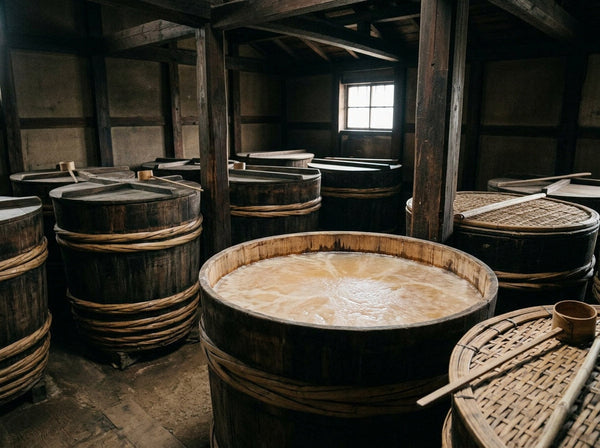
MAFF describes the traditional method step by step. Rice is made into koji, then into a moromi mash with yeast, just as for junmai sake. Seed vinegar and water are added, and the vinegar ferments slowly under a film of acetic acid bacteria floating on the still surface, a method called seichi hakkō (静置発酵), static fermentation. It takes 6 to 12 months.
Japanese fermentation rests on koji. In MAFF's aff magazine, Professor Kenji Maebashi of Tokyo University of Agriculture notes that koji is used for soy sauce, miso, mirin, vinegar, sake and shōchū, and that acetic acid bacteria are what make vinegar.
Source: MAFF Nippon Dentōshoku Zukan page for Kyoto komezu; aff magazine November 2022 fermentation feature. Facts extracted and reworded.
Kyoto's Rice Vinegar
MAFF's traditional foods page for Kyoto shows how deep the tradition runs. Heian-period nobles set vinegar, sake, salt and hishio on the table as the four yogusamono condiments. An Edo-period food encyclopedia, the Honchō Shokkan, rated the vinegar of the Kinki region, especially Kyoto and Fushimi, as the best. Vinegar was even used to fix the colours of Kyoto's Yūzen-dyed silk.
Many Kyoto vinegar brewers are more than 100 years old. They still ferment in wooden vats with their own house bacteria and age the vinegar for 6 to 12 months, and Kyoto rice vinegar is said to be mild and fragrant. Kyoto's saba-zushi shows the vinegar at work: mackerel from Wakasa was salted, carried to Kyoto and cured in vinegar.
Source: MAFF Nippon Dentōshoku Zukan page for Kyoto komezu. Facts extracted and reworded.
Types of Japanese Vinegar
MAFF's consumer advice service sorts Japanese vinegar into these types:
- Jōzōsu, brewed vinegar. The most common: made by acetic fermentation of grain, fruit, vegetables, sugar cane, honey or alcohol.
- Kokumotsusu, grain vinegar. Brewed from one or more grains, such as rice, barley, wheat or corn. Rice vinegar belongs here.
- Kurozu, black vinegar. A grain vinegar, either rice black vinegar or barley black vinegar, matured until dark and mellow.
- Kajitsusu, fruit vinegar. Brewed from fruit.
- Gōseisu, synthetic vinegar. Made from diluted acetic acid with sugars and seasonings; produced in small amounts, mainly for trade pickling.
Akazu (赤酢), red vinegar brewed from aged sake lees, is a further style, long tied to the Edomae sushi of old Tokyo.
Source: MAFF Shōhisha no Heya consumer answer on vinegar types. Facts extracted and reworded.
How to Use Rice Vinegar

MAFF lists the classic uses: sushi rice, sunomono (vinegared salads), namasu (vinegared raw vegetables or fish), marinades and dressings.
- Sushi rice. Season it with sugar and salt, or use a ready sushi vinegar. See our sushi vinegar guide.
- Sunomono. Dress thinly sliced cucumber and wakame with rice vinegar, seasoned to taste.
- Raw dishes. A mild, well-aged vinegar tastes best uncooked, where its aroma shows; Iio Jozo recommends its Premium for raw use.
- Black vinegar. A spoonful in braises, glazes and dipping sauces adds acidity with depth.
Source: MAFF Nippon Dentōshoku Zukan page for Kyoto komezu; Iio Jozo product specification. Facts extracted and reworded.
Popular Products
Kyoto rice vinegar, an everyday bottle, black vinegar and red vinegar.
Iio Jozo Fujisu Premium Rice Vinegar, 1.8L
Junmai rice vinegar from Miyazu, Kyoto: brewed to sake in house, then by static surface fermentation. Iio Jozo says it uses around 320g of rice per litre, eight times the labelling minimum.

Kisaichi Premium Rice Vinegar, 1.8L
Ginjo rice vinegar from rice polished to sake standards, surface fermented. Unseasoned, for your own sushi-zu.

Tamanoi Japanese Rice Vinegar, 500ml
Everyday rice vinegar from an Osaka specialist. Also in 1.8L and 20L.


Frequently Asked Questions
What is the difference between rice vinegar and sushi vinegar?
Rice vinegar is plain; sushi vinegar is rice vinegar already seasoned with sugar and salt.
How is Japanese rice vinegar made?
Rice is made into koji and a sake-style mash, then fermented by acetic acid bacteria; traditionally by static surface fermentation over 6 to 12 months.
What is the difference between rice vinegar and black vinegar?
Black vinegar is a grain vinegar matured for longer, so it is darker, rounder and less sharp.
What is akazu?
Red vinegar brewed from aged sake lees, linked with Edomae sushi.
How should I store rice vinegar?
In a cool, dark place with the cap tightly closed.
Where to Buy Japanese Rice Vinegar in the UK
Our rice vinegar from Kyoto is Iio Jozo Fujisu Premium, brewed in Miyazu since 1893; for everyday use we stock Tamanoi Japanese Rice Vinegar.
For more, browse the Pantry Masterclass. Read next: Sushi vinegar guide · What is ponzu?
Sources: Ministry of Agriculture, Forestry and Fisheries of Japan: Nippon Dentōshoku Zukan page for Kyoto komezu; Shōhisha no Heya consumer answer on vinegar types; aff magazine November 2022 fermentation feature; retrieved 5 November 2026; Iio Jozo, Kisaichi, Tamanoi, Yokoi and Kono product specifications. Facts extracted and reworded, not reproduced.

