
Sushi Vinegar: How Japan Seasons Sushi Rice
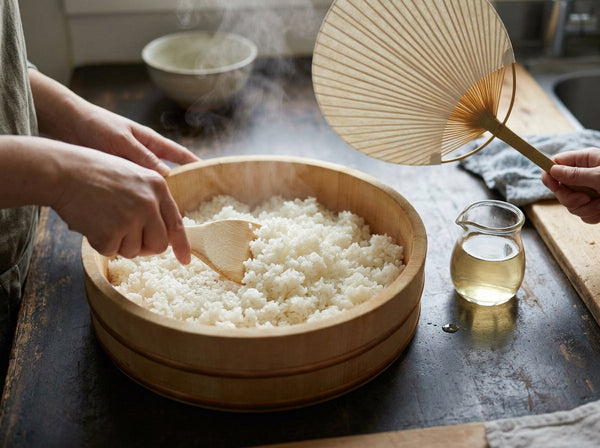
Sushi vinegar, sushi-zu (すし酢), is what turns plain steamed rice into shari, the seasoned rice of sushi: vinegar balanced with sugar and salt, folded into hot rice. Every Japanese region, and nearly every cook, balances it differently.
This guide explains what sushi vinegar is, how to season sushi rice, and three regional sushi vinegars from Japan's Ministry of Agriculture (MAFF) regional cuisine pages. It sits inside our Pantry Masterclass.

Our sushi vinegar: Kisaichi Premium Sushi Vinegar, 360ml, Edomae-style with aged sake-lees vinegar and dashi, and Tamanoi Sushi Vinegar with Kombu Dashi, 1.8L for kitchens.
What Is Sushi Vinegar?
Sushi vinegar is brewed vinegar already seasoned with sugar and salt, so it goes straight onto hot rice. Cooks who mix their own call the blend awase-zu (合わせ酢), mixed vinegar. Plain rice vinegar is the base; ready sushi vinegar saves weighing out the sugar and salt and gives the same rice every batch. Some add more: Kisaichi's uses vinegar from aged sake lees and dashi, Tamanoi's adds kombu dashi.
There is no single correct recipe. MAFF's regional recipes range from 40g to 100g of sugar for 60ml to 100ml of vinegar, depending on the region and the dish.
Source: MAFF Uchi no Kyōdo Ryōri pages for Kōchi inaka-zushi, Kagawa bara-zushi and Wakayama kaki-maburi; Kisaichi and Tamanoi product specifications. Facts extracted and reworded.
How to Season Sushi Rice

- Cook the rice with slightly less water than usual, as MAFF's Kōchi recipe advises.
- If you are making your own awase-zu, warm the vinegar with the sugar and salt until they dissolve.
- Turn the hot rice into a wide bowl or a wooden hangiri straight away and pour the vinegar evenly over it.
- Fold it through with a flat paddle, cutting rather than stirring so the grains do not break, while fanning the rice.
- Fan it to cool it quickly. MAFF's Kōchi page explains that hot rice absorbs the vinegar as it cools, and fanning makes the grains smooth and glossy.
For more on the rice itself, see Cooking sushi rice, a masterclass in rice.
Source: MAFF Uchi no Kyōdo Ryōri page for Kōchi inaka-zushi. Facts extracted and reworded.
Three Regional Sushi Vinegars

Kōchi: Yuzu Vinegar for Inaka-zushi
Inaka-zushi, country sushi, is vegetable sushi from Kōchi's mountain villages, served at okyaku banquets and on the big sawachi platters. It is said to have begun when kombu and nori were hard to come by, so cooks used what the mountains provided: myoga ginger, ryūkyū (a taro stalk) in sweet vinegar, and sweet-simmered shiitake. Its sushi vinegar uses citrus such as yuzu, for a light, fresh sourness; the more yuzu vinegar in the mix, the more sugar goes in.
Kagawa: Sweet Vinegar for Bara-zushi
Bara-zushi is vinegared rice mixed with seasonal vegetables for festive days. The version from Utazu is notably sweet; MAFF suggests this may be because Utazu was a port of the Takamatsu domain with easy access to sugar, and the local salt-makers liked sweet food.
Wakayama: Mirin in Kaki-maburi
Kaki-maburi is a chirashi-style sushi of seasonal vegetables and dried goods mixed into the rice; maburi is local dialect for "to stir". Its awase-zu adds mirin, and some areas use local citrus as the vinegar.
Source: MAFF Uchi no Kyōdo Ryōri pages for Kōchi inaka-zushi, Kagawa bara-zushi and Wakayama kaki-maburi. Facts extracted and reworded.
What Is Akazu?
Akazu (赤酢), red vinegar, is brewed from aged sake lees. It is darker, rounder and more savoury than rice vinegar, colours the rice a light amber, and is long linked with the Edomae sushi of old Tokyo. Kisaichi's sushi vinegars point to that style.
Popular Products
Ready-seasoned sushi vinegar for the home, for the sushi counter, and with yuzu.
Kisaichi Premium Sushi Vinegar, 360ml
Ready-seasoned, with aged sake-lees vinegar and dashi, labelled the taste of Edomae.


Also: Tamanoi Sushi Seasoning Powder, 75g · Yamazaki Premium Sushi Rice, 5kg · Nanatsuboshi Sushi Rice, 5kg
Frequently Asked Questions
What is the difference between sushi vinegar and rice vinegar?
Rice vinegar is plain; sushi vinegar is already seasoned with sugar and salt, ready for the rice.
How much sushi vinegar do I use?
Follow the pack. Tamanoi suggests around 100 to 120ml per 1kg of cooked rice; adjust to taste.
Should I add the vinegar to hot or cold rice?
Hot. The rice absorbs the vinegar as it cools.
Why fan sushi rice?
To cool it quickly, so the grains turn smooth and glossy rather than soggy.
Can I use yuzu in sushi vinegar?
Yes. Kōchi's inaka-zushi uses citrus such as yuzu in its sushi vinegar.
Where to Buy Sushi Vinegar in the UK
We stock Kisaichi Premium Sushi Vinegar, Edomae-style with aged sake-lees vinegar and dashi, and Tamanoi Sushi Vinegar with Kombu Dashi for kitchens.
For more, browse the Pantry Masterclass. Read next: How to use yuzu juice · Japanese sesame guide
Sources: Ministry of Agriculture, Forestry and Fisheries of Japan: Uchi no Kyōdo Ryōri pages for Kōchi inaka-zushi, Kagawa bara-zushi and Wakayama kaki-maburi; retrieved 5 November 2026; Kisaichi, Tamanoi and Saika product specifications. Facts extracted and reworded, not reproduced.

