
Uji Matcha and the Matcha Latte: A Guide
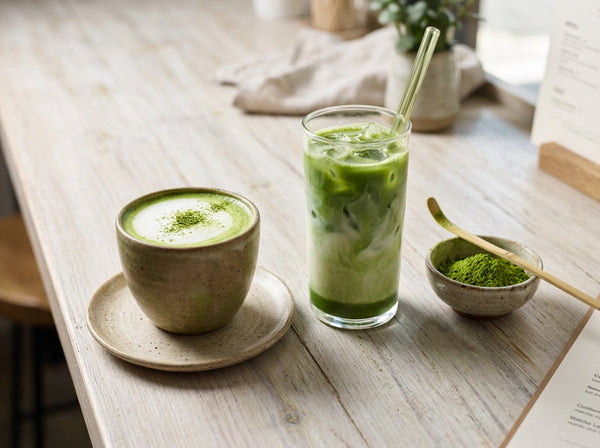
Matcha is powdered green tea, and the name most linked with it is Uji, the tea district south of Kyoto. Today matcha is drunk as a latte as well as whisked in a tea bowl.
This guide explains what Uji tea is, how shading makes matcha, the difference between usucha and koicha, and how to make a matcha latte, from MAFF's own Uji recipe to a ready concentrate. It sits inside our Drinks Masterclass.

For lattes without a whisk: Meets Matcha Latte Concentrate, 500g, made in Japan with Japanese matcha, and Odani Kokufun Sweet Green Tea Powder with Uji Matcha, 100g.
What Is Uji Tea?

Japan's Ministry of Agriculture (MAFF) gives the definition: Uji-cha is green tea from leaves grown in Kyoto, Nara, Shiga and Mie, finished by Kyoto firms using methods that come from the Uji area. Rich, well-drained soil, plenty of rain and sloping land with big differences between day and night temperatures made the land along the Uji and Kizu rivers a great tea-growing area. Uji teas include tencha, sencha, gyokuro, hōjicha, kabusecha and genmaicha.
Source: MAFF Nippon Dentōshoku Zukan page for Kyoto Uji-cha. Facts extracted and reworded.
A Short History of Uji Tea
MAFF's account of the history: the monk Eisai brought tea from Song China in 1191. The priest Myōe planted it at Kōzan-ji temple in Toganoo, north of Kyoto, and from there it was planted out in Uji. In the 15th century the Ashikaga shoguns favoured Uji tea and encouraged tea gardens there; one, the Oku-no-yama tea garden, still survives in Uji City.
Source: MAFF Nippon Dentōshoku Zukan page for Kyoto Uji-cha. Facts extracted and reworded.
How Shading Makes Matcha
In the 16th century, as the tea ceremony grew, shaded growing (ōishita saibai) was developed to meet the wishes of tea masters such as Sen no Rikyū, giving a deep-green matcha strong in umami.
MAFF explains why it works. Tea contains theanine, an amino acid that gives umami. Theanine made in the roots moves to the leaves, but in sunlight it turns into catechins, which are astringent. Covering the tea garden to block the sun keeps more theanine in the leaf. Tencha, gyokuro and kabusecha all use shaded leaves.
Matcha is made from tencha: the bright young shaded leaves are steamed and dried without rolling, the stems and veins are removed, and the leaf is ground to a fine powder on a stone mill. In Uji, the first flush, from late April to late May, is picked by hand, shoot by shoot, mainly for tencha and gyokuro.
Source: MAFF Nippon Dentōshoku Zukan page for Kyoto Uji-cha; aff magazine April 2017 matcha feature. Facts extracted and reworded.
Usucha and Koicha
In the tea ceremony matcha is made two ways. Usucha is thin tea, whisked to a light froth; koicha is thick tea, made with more matcha and a higher grade of it. MAFF's aff magazine describes a simple tray method, bon-ryaku temae, for making usucha at home.
Source: MAFF aff magazine April 2017 matcha feature. Facts extracted and reworded.
How to Make a Matcha Latte

MAFF's Uji tea latte:
- Sift 4 teaspoons of Uji matcha into a bowl with 2 teaspoons of caster sugar.
- Add 3 tablespoons of hot water and mix to a smooth paste.
- Heat 360ml of milk to just below boiling, froth it, and pour it over the paste.
- Finish with a light dusting of matcha.
For speed, a ready concentrate skips the sifting and whisking: pour a measure into hot milk for a latte, cold milk over ice for an iced latte, or soda water for a sparkling matcha.
Source: MAFF aff magazine April 2017 matcha feature; Meets product specification. Facts extracted and reworded.
Matcha Beyond Drinks
MAFF's aff magazine also uses matcha beyond drinks, for its colour, aroma and slight bitterness: stirred into mayonnaise for a matcha potato salad, in a saikyō miso and matcha sauce for white fish, and as a syrup for kakigōri shaved ice.
Source: MAFF aff magazine April 2017 matcha feature. Facts extracted and reworded.
Popular Products
For lattes without a whisk, and a matcha liqueur.
Meets Matcha Latte Concentrate, 500g
A liquid matcha base: pour and dilute for hot, iced or sparkling matcha.


Frequently Asked Questions
What is Uji matcha?
Matcha from Uji tea: green tea grown in Kyoto, Nara, Shiga or Mie and finished in Kyoto by Uji methods.
Why is matcha shaded?
Shade keeps theanine, which gives umami, from turning into astringent catechins.
What is the difference between usucha and koicha?
Usucha is thin, frothy tea; koicha is thick tea made with more, higher-grade matcha.
Is sweet green tea powder the same as matcha?
No. Matcha is pure powdered tencha; sweet green tea powders add sugar and contain some matcha.
How do I make an iced matcha latte?
Mix matcha to a paste with a little water, or use a concentrate, then pour over cold milk and ice.
Where to Buy Matcha in the UK
For lattes without a whisk we stock Meets Matcha Latte Concentrate, made in Japan with Japanese matcha, and Odani Kokufun Sweet Green Tea Powder with Uji Matcha.
For more, browse the Drinks Masterclass. Read next: Japanese Food Guide: Matcha · Best matcha UK
Sources: Ministry of Agriculture, Forestry and Fisheries of Japan: Nippon Dentōshoku Zukan page for Kyoto Uji-cha; aff magazine April 2017 matcha feature; retrieved 5 November 2026; Meets and Odani Kokufun product specifications. Facts extracted and reworded, not reproduced.

